Antilock Brakes / Traction Control Systems: Description and Operation
GENERAL DESCRIPTIONFEATURES
ABS electronically controls the brake fluid pressure of all 4 wheels to ensure stability and operability (driveablity) in the direction of the vehicle upon quick braking.
This ABS features a 4 sensor, 3 channel system with left/right independent control of the front wheels and integrated control of the rear wheels (select low control).
NOTE: Select low control: Control system that compares the speeds of the right and left wheels and performs the same fluid pressure control on both wheels according to the speed of the wheel that is likely to be locked
^ EBD (Electronic Brake-force Distribution system) control has been added to provide the ideal braking force for the rear wheels.
^ Fail-safe function which ensures that safety is maintained
^ Diagnostic function which provides improved serviceability
EBD CONTROL
In ABS, electronic control method is used whereby the rear wheel brake hydraulic pressure during braking is regulated by rear wheel control solenoid valves in accordance with the vehicle's rate of deceleration and the front and rear wheel slippage which are calculated from the signals received from the various wheel sensors. EBD control is a control system which provides a high level of control for both vehicle braking force and vehicle stability. The system has the following features:
^ Because the system provides the optimum rear wheel braking force regardless of the vehicle laden condition and the condition of the road surface, the system reduces the required pedal depression force, particularly when the vehicle is heavily laden or driving on road surfaces with high frictional coefficients.
^ Because the duty placed on the front brakes has been reduced, the increases in pad temperature can be controlled during front brakes applying to improve the wear resistance characteristics of the pad.
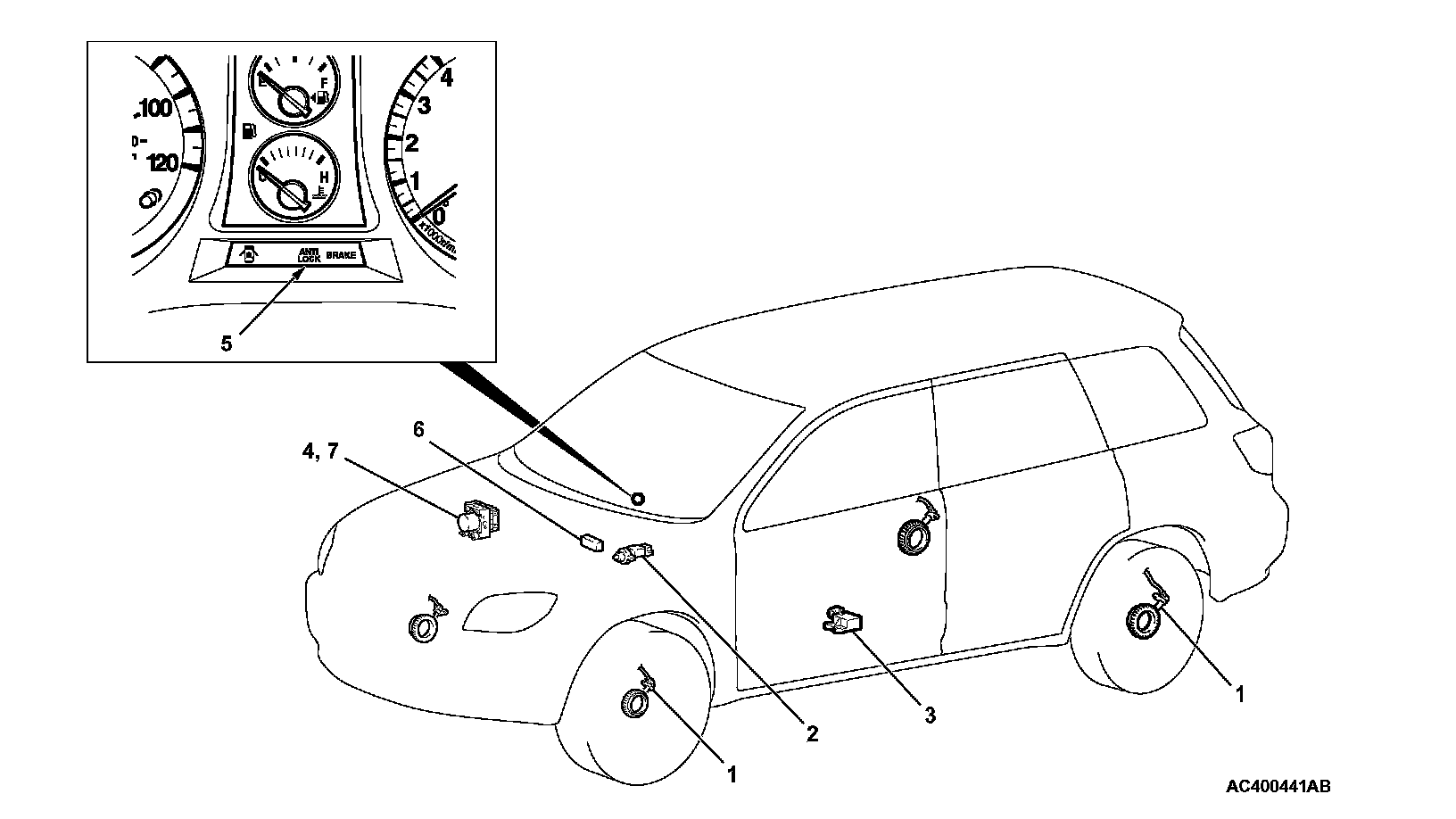
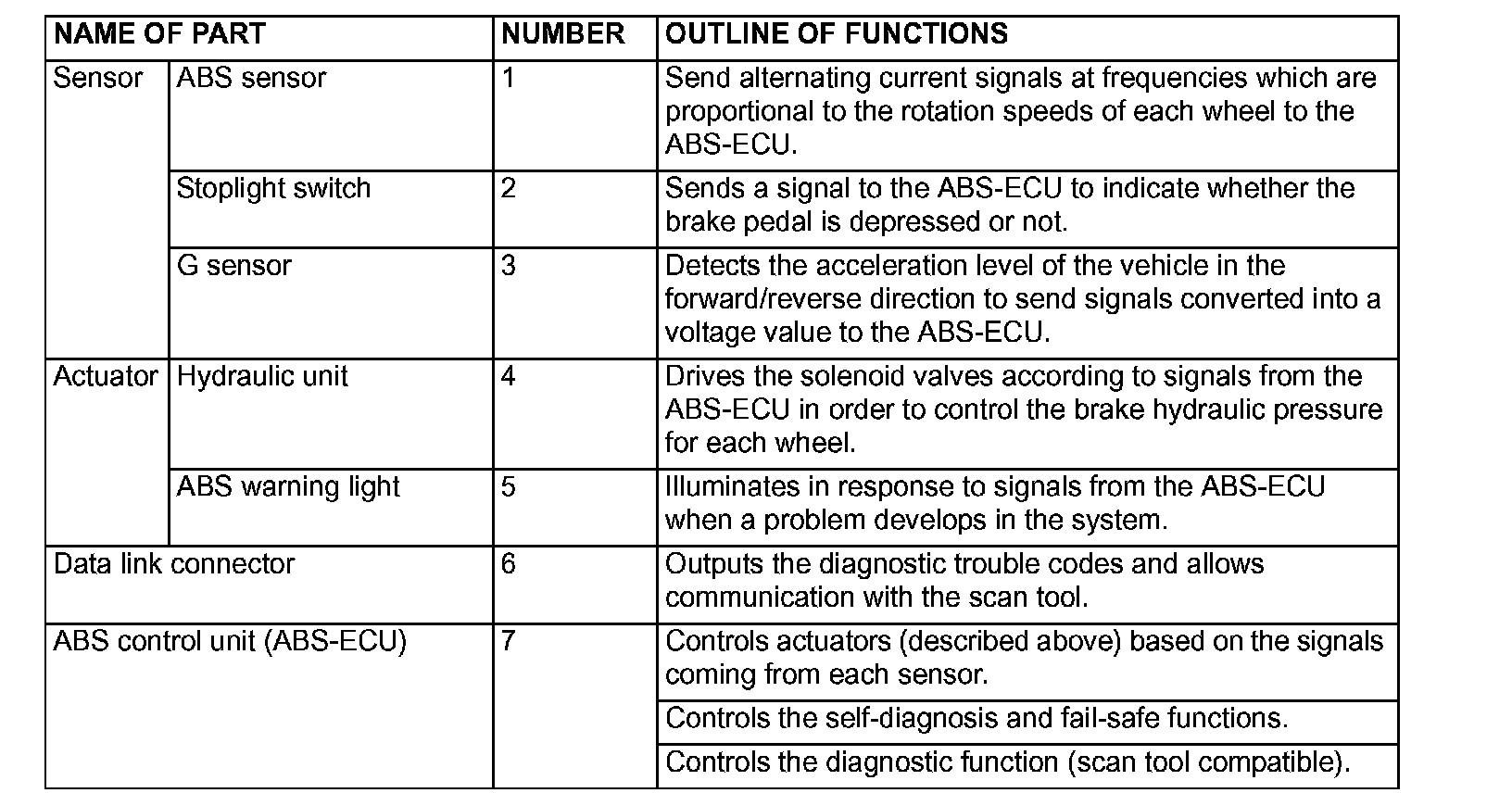
CONSTRUCTION DIAGRAM
SYSTEM CHECK SOUND
When starting the engine, a thudding sound can sometimes be heard coming from the engine compartment. This is a normal sound during the ABS self-check.
ABS OPERATION SOUNDS AND SENSATIONS
During normal operation, the ABS makes several sounds that may seem unusual at first:
^ A whining sound is caused by the ABS hydraulic unit motor.
^ When pressure is applied to the brake pedal, the pulsation of the pedal causes a scraping sound.
^ When the brakes are applied firmly, the ABS operates, rapidly applying and releasing the brakes many times per second. This repeated application and release of braking forces can cause the suspension to make a thumping sound and the tires to squeak.
LONG STOPPING DISTANCES ON LOOSE ROAD SURFACES
When braking on loose surfaces like snow-covered or gravel roads, the stopping distance can be longer for an ABS-equipped vehicle than the stopping distance for a vehicle with a conventional brake system.
SHOCK AT STARTING CHECK
Shock may be felt when the brake pedal is lightly pressed while driving at a low speed. This is a normal characteristic because the ABS system operation check is carried out when vehicle speed is 8 km/h (5 mph) or less.